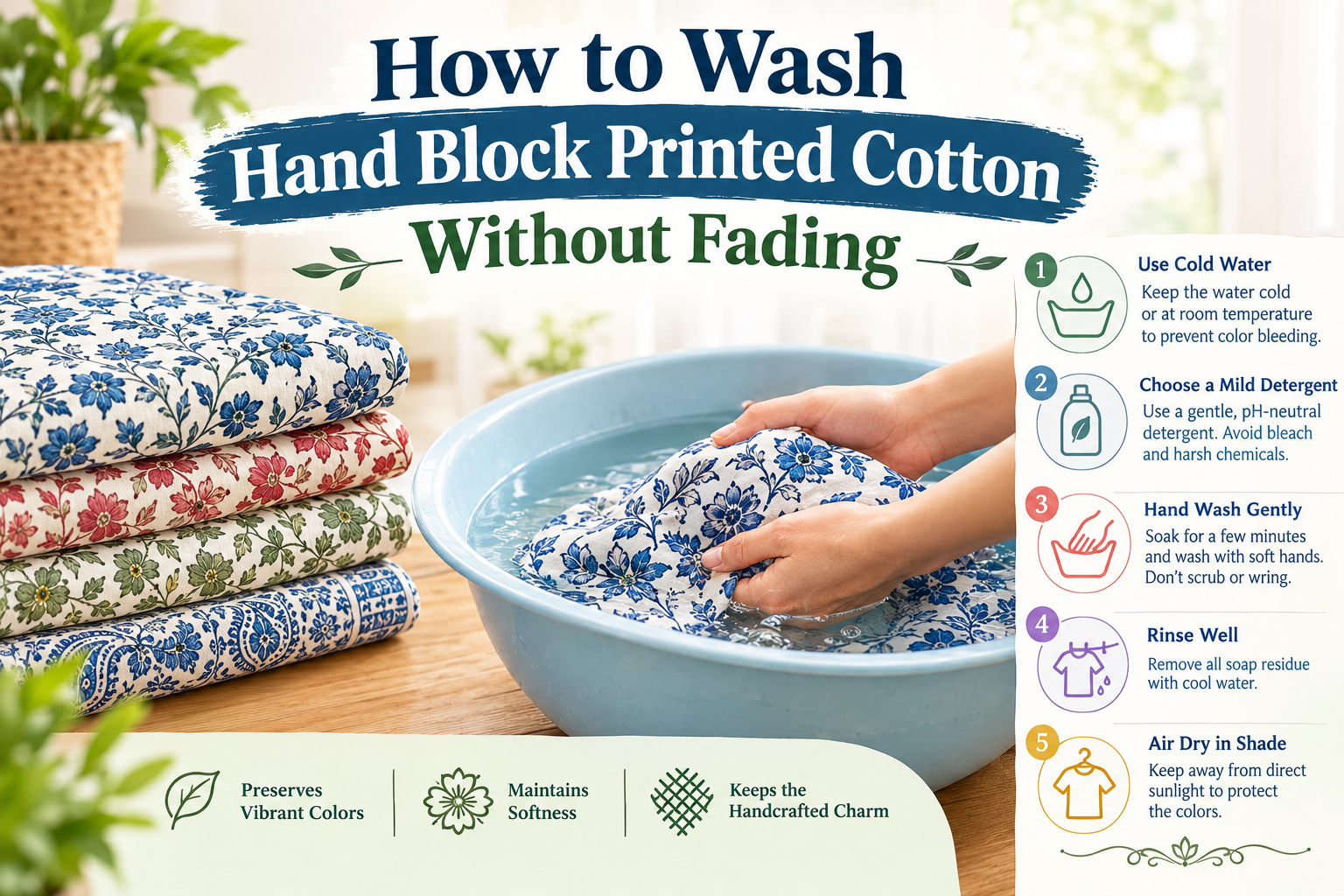
- Wash block printed fabric separately in cold water for the first two or three washes.
- Use a mild liquid detergent with no bleach or optical brighteners.
- Turn pieces inside out and use a gentle cycle at 30°C (86°F) or below.
- Dry in the shade. Direct sun fades printed colours faster than anything else.
- Iron on the reverse while slightly damp.
Hand block printed cotton is made to be used, washed and loved for years. Many pieces actually get softer and more beautiful with every wash. But the dyes in hand prints behave differently from those in mass-produced fabric, and a single hot wash or a day in harsh sun can dull colours that should have lasted a decade. This guide explains how to wash block printed fabric the right way, from the very first wash to stain removal, drying and storage.
Why block printed fabric fades
Understanding why colours fade makes the care rules easy to remember. Hand block printers use three broad types of colour:
- Natural dyes such as indigo, madder, pomegranate and turmeric bond to cotton with the help of mordants. They age gracefully but are sensitive to strong sunlight, hot water and alkaline detergents.
- Pigment colours sit on the surface of the fibre, held by a binder. They are bright, but heavy friction and hot washes slowly wear them away.
- Reactive dyes bond chemically with cotton and are generally very colourfast once excess dye has been washed out.
The main causes of fading are the same for all three: high temperatures, harsh detergents and bleach, friction against heavier items in the wash, and long exposure to direct sunlight. Excess dye that was not fully rinsed during finishing can also bleed in the first few washes. If you are curious how these dyes are applied, our guide to hand block printing step by step explains the full process.
Before the first wash
Always read the care label first. If a maker recommends dry cleaning or hand washing only, follow that advice. Then do a quick colourfastness test, especially on deep reds, indigo and black prints.
- Dampen a clean white cotton cloth with cold water.
- Rub it firmly on a hidden area of the print, such as a hem or seam allowance, for about ten seconds.
- If colour transfers noticeably to the white cloth, the piece needs extra care: wash it alone, by hand, in cold water until the rinse water runs clear.
How to do the first wash
The first wash removes leftover gum, starch and loose dye from the printing process.
- Wash the piece on its own, or only with items in very similar colours.
- Use cold water.
- Add a small amount of mild liquid detergent.
- Some people add a cup of white vinegar or a tablespoon of salt to the first rinse. These are traditional household methods; they will not fix dye that was poorly set at the workshop, but they do no harm to cotton.
- Rinse until the water runs nearly clear.
A little colour in the first rinse water is normal for hand-printed fabric and is not a sign of poor quality. It should reduce quickly with each wash.
How to machine wash block printed fabric
Most block printed cotton, including tablecloths, napkins, duvet covers and pillow covers, can go in the washing machine if you follow these settings.
| Setting | Recommendation |
|---|---|
| Cycle | Gentle, delicate or hand-wash cycle |
| Temperature | Cold to 30°C (86°F); never hot |
| Spin | Low to medium |
| Load | Half to two-thirds full so items move freely |
| Preparation | Turn inside out; close buttons, ties and zips |
| Companions | Similar colours; no jeans, towels or zipped items |
Heavy items like denim and towels rub against prints during the wash and cause fading through friction. A mesh laundry bag adds extra protection for napkins and smaller pieces.
How to hand wash block printed cotton
Hand wash anything with embroidery, beading, mirrors or kantha stitching, and any piece that failed the colourfastness test.
- Fill a clean basin with cold or lukewarm water and dissolve a small amount of mild detergent.
- Submerge the fabric and gently swish it for two to three minutes. Do not scrub, twist or wring.
- Do not leave it soaking for long periods, which can let dye migrate into lighter areas.
- Drain and rinse in cold water until the water runs clear.
- Press out water by rolling the piece in a clean towel rather than wringing it.
Choosing the right detergent
- Use: mild liquid detergents for colours or delicates, or a gentle pH-neutral wool and silk wash.
- Avoid: chlorine bleach, oxygen bleach boosters on dark prints, and detergents with optical brighteners, which are designed to make whites look whiter and can make printed colours look dull.
- Avoid powders in cold washes: they may not dissolve fully and can leave streaks.
- Skip fabric softener: it coats cotton fibres, reduces absorbency in napkins and is not needed; block printed cotton softens naturally with washing.
How to remove common stains
Treat stains as soon as possible, always from the back of the fabric, and always test any stain remover on a hidden area first.
| Stain | What to do |
|---|---|
| Red wine | Blot (do not rub), flush from the back with cold water, then work in a little liquid detergent and wash cool. |
| Coffee or tea | Rinse with cold water from the back, apply liquid detergent, leave ten minutes, then wash. |
| Oil and grease | Cover with cornflour or talc to absorb oil, brush off, then dab with a drop of washing-up liquid before washing. |
| Turmeric and curry | Scrape off excess, rinse in cold water, treat with washing-up liquid and wash promptly. Never use hot water, which can set the stain. |
| Candle wax | Let it harden, lift off what you can, then place paper towel over the wax and press with a warm iron to draw it out. |
| Ink | Dab gently with a little rubbing alcohol on a cotton pad after testing on a hidden area, then wash. |
Avoid bleach-based stain removers on any printed area; they will lift the print along with the stain.
How to dry block printed fabric
Drying is where many block prints lose their colour. Sunlight is excellent for whites but works against printed colours, especially natural dyes.
- Line dry in the shade or indoors, inside out.
- Shake out and smooth the fabric before hanging to reduce creases.
- Hang large items like tablecloths and duvet covers over two lines so air circulates.
- If you must tumble dry, use the lowest heat and remove items while slightly damp to reduce shrinkage.
Cotton can shrink 3–5% on its first hot wash and dry. If you are buying a tablecloth, our tablecloth size chart explains how to allow for this.
Ironing block printed cotton
Iron on the reverse side while the fabric is still slightly damp, using a medium cotton setting. Ironing on the back protects the print from shine and heat. For crisp tablecloths and napkins, a light spray of water helps more than starch, which can attract insects in storage.
Storing block printed linens
- Make sure everything is completely dry before putting it away.
- Store folded in a cool, dry, dark cupboard.
- Refold along different lines every few months so permanent creases do not form.
- Use cotton storage bags or pillowcases rather than plastic, which traps moisture and can cause yellowing or mildew.
- A sachet of dried neem leaves, cedar blocks or lavender helps keep insects away.
Care guide by item
| Item | Wash | Dry |
|---|---|---|
| Tablecloths, runners, napkins | Gentle, cold to 30°C, inside out | Line dry in shade |
| Duvet covers, sheets, pillow covers | Gentle, 30°C, close buttons | Line dry or low tumble |
| Curtains and sheers | Hand wash or delicate cycle | Rehang while slightly damp |
| Kantha quilts | Hand wash, or dry clean if heavy | Flat or over two lines in shade |
| Quilted razai and bedspreads | Gentle cycle in a large machine, or professional cleaning | Flat or line dry in shade |
For curtains, take down the hardware first and wash panels individually. Our guide to sheer curtains covers how to rehang them so they fall evenly. For kantha, see our dedicated guide to kantha quilts.
How to revive faded block prints
Fading cannot be fully reversed, but you can improve how a tired piece looks. A thorough wash removes detergent build-up that dulls colours. Ironing on the reverse restores crispness. If a piece has faded unevenly, consider giving it a new life as cushion covers, napkins or a table runner, using the best-preserved sections.
Common washing mistakes
- Washing with hot water or on a cotton or heavy-duty cycle.
- Mixing new prints with whites in the first few washes.
- Using bleach or "whitening" detergents.
- Leaving wet fabric bunched in the machine, which lets colour transfer.
- Drying in full midday sun.
Frequently asked questions
Does hand block printed fabric bleed?
Some excess dye may come out in the first few washes, especially with deep reds and indigo. Washing separately in cold water prevents it from transferring to other items.
Can I use hot water on block printed cotton?
It is best avoided. Hot water speeds fading and shrinkage. Cold water or 30°C is enough to clean household linens.
Can I machine wash block printed fabric?
Yes, most block printed cotton can be machine washed on a gentle cycle in cold water, turned inside out. Hand wash embroidered or kantha pieces.
How do I stop block printed fabric from fading?
Wash cold, use mild detergent without bleach or brighteners, turn items inside out and always dry in the shade.
How do I remove a wine stain from a block printed tablecloth?
Blot, rinse from the back with cold water, then treat with mild liquid detergent and wash cool. Avoid bleach, which lifts the print.