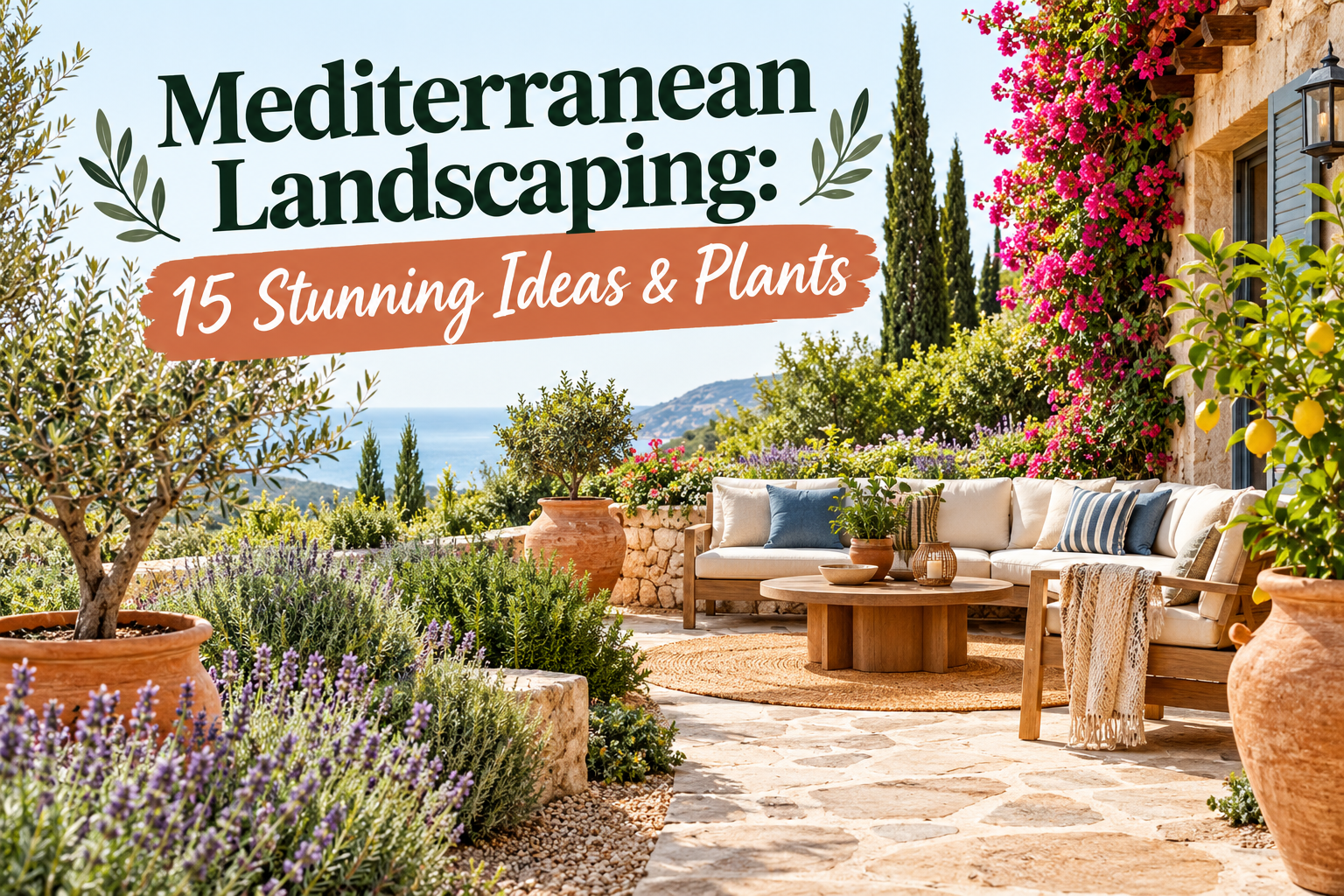
Mediterranean landscaping combines natural stone, fragrant herbs, drought-tolerant plants, warm earthy colors, and inviting outdoor living spaces. Inspired by gardens in Italy, Spain, southern France, and Greece, this landscape style creates an atmosphere that feels relaxed, elegant, and connected to nature.
You don't need a large estate or a coastal villa to achieve the look. A small front yard, suburban backyard, or sunny courtyard can incorporate Mediterranean garden features with the right layout, materials, and plants.
The style is especially well suited to regions with hot, dry summers and mild, wetter winters, including many parts of California. However, it can also be adapted to different climates by choosing locally appropriate plants.
Quick answer: To create Mediterranean landscaping, begin with a simple garden layout, choose gravel or natural stone pathways, incorporate climate-appropriate plants such as lavender and rosemary, and add terracotta containers, seating, and shade. Group plants with similar water needs and use efficient irrigation to create a garden that is both attractive and practical.
This guide covers 15 Mediterranean landscaping ideas, recommended plants, front and backyard designs, essential materials, budget considerations, and low-maintenance garden care.
What Is Mediterranean Landscaping?
Mediterranean landscaping is a garden design style inspired by regions surrounding the Mediterranean Sea.
It traditionally incorporates plants and materials adapted to sunny environments, seasonal rainfall, and outdoor living.
Common characteristics include natural stone surfaces, textured foliage, fragrant herbs, terracotta containers, and carefully arranged seating areas.
Rather than depending on large lawns or formal flower beds, Mediterranean gardens often emphasize attractive pathways, outdoor gathering spaces, and layered planting.
Key Features of Mediterranean Landscape Design
Drought-tolerant planting: Climate-appropriate shrubs, trees, grasses, and herbs.
Natural hardscaping: Gravel, stone pavers, cobblestones, and decomposed granite.
Warm colors: Terracotta, cream, sand, olive green, and muted gray.
Outdoor living areas: Patios, dining spaces, courtyards, and shaded seating.
Architectural plants: Olive trees, compact shrubs, sculptural succulents, and aromatic herbs where suitable.
Simple layouts: Defined paths, repeated plants, and clear focal points.
A successful Mediterranean landscape should balance appearance with drainage, water availability, plant health, and everyday usability.
15 Mediterranean Landscaping Ideas for Your Garden
1. Create a Mediterranean Gravel Garden
<escape></escape>
Gravel is one of the most recognizable elements of Mediterranean-style landscaping.
A gravel garden can visually connect planting areas, patios, and walkways while reducing the amount of irrigated lawn.
Light gray, buff, and warm beige gravel complement plants with silver-green foliage.
For a cohesive appearance, use one primary gravel color and repeat it across related garden areas.
Choose the material according to its intended use. Loose pea gravel may shift underfoot, while properly installed compacted decomposed granite can provide a firmer surface.
For accessible main routes, use surfaces that meet appropriate firmness, stability, and slip-resistance requirements.
Avoid covering the entire landscape with stone in very hot areas, because extensive exposed rock can increase reflected and stored heat.
2. Plant Olive Trees as Focal Points
Olive trees are strongly associated with Mediterranean gardens.
Their narrow silver-green leaves and sculptural trunks provide distinctive texture.
An olive tree can become the centerpiece of a courtyard, entrance garden, or sunny patio.
For smaller spaces, choose a cultivar with an appropriate mature size and fruiting habit.
Some fruitless cultivars may be preferable near walkways and outdoor furniture because dropped fruit can create mess and staining.
Olive trees generally prefer full sun and well-drained conditions, but suitability depends on winter temperatures, soil, climate, and local pest or agricultural restrictions.
Check local recommendations before planting, particularly where olives are restricted or face serious pest and disease concerns.
3. Use Lavender for Color and Fragrance
Lavender adds purple flowers, silvery foliage, and a distinctive fragrance.
It can be planted along gravel pathways, near seating areas, or in repeated groups around a courtyard.
Lavender commonly prefers sunny conditions and well-drained soil.
Waterlogged soil is a frequent reason plants perform poorly.
For a Mediterranean-style border, combine lavender with suitable compact herbs and evergreen shrubs that share similar growing requirements.
Choose a lavender species and cultivar appropriate for your regional climate. Some types struggle in high humidity, extreme heat, or persistently wet conditions.
4. Add Natural Stone Walkways
Stone pathways give Mediterranean gardens an established, architectural appearance.
Natural stone can connect a patio, entrance, seating area, and planting beds.
Common design choices include limestone, sandstone, travertine, and regional stone.
Select paving based on outdoor durability, slip resistance, maintenance, and local weather conditions.
A lightly irregular pathway may suit a rustic garden, while straighter stone lines can work with a modern Mediterranean landscape.
Ensure the underlying base and drainage are appropriate for local soil conditions.
5. Create a Mediterranean Courtyard
A courtyard can make even a relatively small outdoor space feel intentional.
The design typically centers on a useful focal point, such as a tree, fountain, decorative pot, or seating area.
Surrounding walls, fences, or planting can create a sense of enclosure and privacy.
Use terracotta pots, natural stone, and simple furniture to reinforce the style.
Where water restrictions permit, a small recirculating fountain may add movement and sound. Consider evaporation, cleaning, child safety, and ongoing maintenance before installing one.
6. Decorate With Terracotta Pots
Terracotta planters bring warmth and texture to Mediterranean-style gardens.
They work well near doorways, along patios, and in sunny courtyard corners.
Try arranging three containers of different heights to create a balanced composition.
Use pots with drainage holes and a potting medium appropriate for the plants.
Container-grown herbs and trees generally need more frequent monitoring and watering than comparable established in-ground plants.
For larger planters, consider their filled weight before placing them on balconies or raised structures.
7. Build a Mediterranean Outdoor Dining Area
Outdoor dining is a major part of the Mediterranean garden aesthetic.
A simple dining table can become a focal point when surrounded by attractive planting and appropriate shade.
Consider natural wood, powder-coated metal, or other durable outdoor furniture.
Use gravel or properly installed paving beneath the dining area.
Position the table close enough to the kitchen for practical everyday use.
Provide sufficient space for chairs to move and for people to walk around the seating area comfortably.
8. Add a Pergola for Shade
A pergola can create an attractive transition between the home and garden.
Wooden or metal pergolas are commonly used over patios, outdoor dining spaces, and garden walkways.
Climbing plants may soften the structure, but select species based on local climate, mature weight, pruning needs, and root behavior.
A pergola does not necessarily provide complete sun protection, especially at low sun angles.
Plan additional shade where required, and make sure structures comply with local building requirements.
9. Use Rosemary and Fragrant Herbs
Mediterranean herbs make landscaping both decorative and practical.
Rosemary, thyme, oregano, and suitable sage varieties introduce fragrance and interesting foliage.
These plants can be used in planting beds, beside paths, or in containers.
However, they do not all have identical water, soil, or climate requirements.
Group plants according to their actual needs rather than assuming every herb should share one irrigation zone.
In areas where certain rosemary cultivars spread aggressively or are not suitable for the local ecosystem, choose a better-adapted alternative.
10. Design a Mediterranean Front Yard
Mediterranean front yard landscaping can improve the appearance of your home's entrance without requiring a large lawn.
Start with a clear, comfortable walkway from the street or driveway to the front door.
Place a small ornamental tree or architecturally distinctive shrub where space allows.
Use repeated clusters of climate-appropriate plants along the entrance.
Natural stone borders, terracotta pots, and a restrained color palette can tie the landscape to the home's architecture.
Avoid planting mature-sized shrubs where they obstruct windows, paths, visibility, or access.
11. Create a Mediterranean Backyard Retreat
A backyard can combine several Mediterranean landscape features into one cohesive space.
Consider dividing it into functional areas, such as dining, relaxing, and planting.
Use consistent hardscape materials to connect the areas.
A patio bordered by lavender, rosemary, or suitable evergreen shrubs can create an inviting seating space.
Larger properties might include a bocce court, outdoor kitchen, or shaded gathering area.
For small backyards, focus on fewer features executed well rather than trying to fit everything into limited space.
12. Incorporate California Native Plants
A Mediterranean-inspired garden does not need to rely exclusively on European plants.
Many California native species can complement the style while supporting local wildlife.
Depending on the location and growing conditions, options worth investigating include California sagebrush, certain California buckwheats, some native sages, and appropriately selected manzanitas.
Native plants vary considerably in soil, water, and sun preferences.
Some require very specific drainage conditions or perform poorly with frequent summer irrigation.
Choose locally appropriate species through regional native plant nurseries and reliable horticultural resources.
13. Combine Silver, Green, and Earthy Colors
Mediterranean landscapes often use foliage as a major source of visual interest.
Silver-gray leaves can contrast with deep green shrubs, while warm stone and terracotta introduce natural color.
A restrained palette also helps repeated plant groupings feel connected.
Try combining evergreen structure with seasonal flowering plants.
Avoid relying entirely on bright flowers for visual interest.
A garden with attractive foliage, texture, and well-chosen hardscaping can remain appealing throughout the year.
14. Replace Unnecessary Lawn With Water-Wise Planting
Large turfgrass lawns often require considerable irrigation in hot, dry climates.
Where appropriate, replace nonessential lawn sections with planted beds, mulch, pathways, or functional outdoor living areas.
However, replacing grass with an expanse of bare gravel is not automatically the most comfortable or environmentally beneficial solution.
A better approach combines suitable planting, soil protection, permeable surfaces, and shade.
Retain useful lawn areas where they serve children, pets, or other household needs and where water use can be managed responsibly.
15. Create a Low-Maintenance Mediterranean Garden
Low-maintenance landscaping begins with appropriate design decisions.
Choose plants that suit your local climate rather than selecting them solely for their appearance.
Group plants with similar water requirements.
Provide suitable soil drainage and mulch.
Install efficient irrigation where needed.
Leave enough room for mature plants so that they do not require constant pruning.
No garden is entirely maintenance-free, but thoughtful plant selection and layout can reduce unnecessary work over time.
Best Plants for Mediterranean Landscaping
Plants are central to the Mediterranean style, but choosing suitable species requires considering climate, sunlight, soil, mature size, and water needs.
| Plant | Main Appeal | Typical Growing Preference | Design Use |
|---|---|---|---|
| Olive tree | Sculptural form, silver-green foliage | Full sun, well-drained soil | Focal point |
| Lavender | Purple flowers and fragrance | Sun and excellent drainage | Borders and pathways |
| Rosemary | Aromatic evergreen foliage | Sun and suitable drainage | Low hedges and herb beds |
| Santolina | Silver or green mounded foliage | Sunny, relatively dry conditions | Edging |
| Rockrose (Cistus) | Showy seasonal flowers | Sun, well-drained soil | Flowering shrub beds |
| Bay laurel | Dense evergreen foliage | Sun to partial shade, climate-dependent | Containers and screening |
| Mediterranean fan palm | Architectural foliage | Warm, suitable climates | Courtyard accent |
| Thyme | Low-growing fragrant foliage | Sun and suitable drainage | Small beds and containers |
| California buckwheat | Pollinator-friendly flowering forms | Species-dependent | California-adapted planting |
| Manzanita | Evergreen foliage and distinctive bark | Species-specific soil and water needs | Native garden structure |
Not all listed plants are suitable in every US region. Check USDA hardiness, regional growing conditions, local invasive-plant guidance, and irrigation needs before purchasing.
Choosing Plants for California Mediterranean Landscaping
Many California locations experience dry summers and wetter winters, making Mediterranean-style planting attractive.
However, coastal California, inland valleys, foothills, and mountain communities differ significantly.
A species suited to mild coastal conditions may not tolerate the summer heat of an inland site or freezing conditions at higher elevations.
Use local horticultural resources and the California Water Use Classification of Landscape Species (WUCOLS) when planning irrigation.
Mediterranean Landscaping Materials: Gravel, Stone, and Terracotta
Hardscaping provides much of the garden's structure.
| Material | Benefits | Considerations |
|---|---|---|
| Pea gravel | Informal appearance, relatively simple installation | Can shift and scatter |
| Decomposed granite | Natural color, suitable for some compacted paths | Requires correct installation and maintenance |
| Travertine | Distinctive natural stone appearance | Finish, climate suitability, and slip resistance matter |
| Flagstone | Natural shapes and attractive texture | May need careful leveling |
| Terracotta | Warm traditional appearance | Some pots are vulnerable to frost |
| Metal edging | Helps define gravel and planting areas | Must be securely installed |
| Organic mulch | Protects soil and reduces evaporation | Requires replenishment |
Material selection should also account for local drainage, slope, traffic, maintenance, and accessibility.
Permeable hardscaping can help manage runoff, but results depend on underlying soil permeability and proper construction.
How to Design a Mediterranean Landscape Step by Step
Step 1: Analyze Your Yard
Measure the outdoor space.
Identify areas of sun, shade, wind exposure, and poor drainage.
Note existing trees, pathways, utilities, slopes, and structures.
Step 2: Choose the Garden's Main Function
Decide whether the space should prioritize entertaining, relaxation, gardening, curb appeal, or a combination.
A front yard and a family backyard may need very different layouts.
Step 3: Draw a Simple Landscape Plan
Mark walking routes, seating areas, and planting beds before choosing individual plants.
Allow enough room for mature plant growth.
Step 4: Select a Consistent Material Palette
Choose a limited number of compatible hardscaping materials.
For example, gravel, pale stone, and terracotta can form a cohesive design.
Step 5: Choose Climate-Appropriate Plants
Select plants based on sunlight, mature size, hardiness, drainage, and water requirements.
Repeat a few compatible plant groups throughout the landscape.
Step 6: Plan Irrigation and Drainage
Group plants into hydrozones according to similar watering needs.
Choose efficient irrigation equipment and design drainage appropriate for the site.
Step 7: Install Hardscape and Major Features
Complete necessary site preparation, grading, pathways, and structures before filling the garden with plants.
Consult qualified professionals for structural work, retaining walls, complex drainage, or electrical installations.
Step 8: Plant and Mulch
Plant at appropriate spacing and during a suitable season.
Use mulch where appropriate, keeping it away from trunks and plant crowns.
Step 9: Allow Plants to Establish
Even drought-tolerant plants usually need supplemental watering while establishing roots.
The establishment period varies by species, planting season, soil, and weather.
Step 10: Review and Adjust
Observe how the garden performs through different seasons.
Adjust irrigation and plant care according to actual conditions.
Mediterranean Landscaping on a Budget
A Mediterranean-style garden does not require expensive custom stonework or mature imported trees.
Begin with the improvements that offer the greatest functional benefit.
A simple gravel path, a small grouping of appropriate plants, and a few terracotta containers may create the desired appearance without a complete landscape renovation.
Budget-Friendly Approaches
Reuse existing suitable paving materials.
Introduce planting in phases.
Buy appropriately sized young plants instead of expensive mature specimens.
Use repeated groups of affordable plants.
Prioritize a useful seating area over decorative structures.
Compare locally available stone and gravel materials.
Reduce unnecessary lawn gradually rather than replacing everything at once.
Illustrative Budget Ranges
| Project Scope | Example Budget in USD |
|---|---|
| Container refresh and small plantings | $100–$500 |
| Modest DIY planting bed or pathway | $500–$2,000 |
| Small yard refresh with materials and some labor | $2,000–$8,000 |
| More extensive professional landscape work | $8,000+ |
These are planning illustrations, not contractor quotes or verified market averages. Actual costs vary widely by area, grading, irrigation work, materials, site access, and labor.
How to Maintain a Mediterranean Garden
Mediterranean landscaping is often described as low maintenance, but it still requires seasonal care.
Watering
Many established drought-tolerant species need less irrigation than conventional high-water-use planting.
However, the correct schedule depends on the plant, climate, soil, root development, and rainfall.
Avoid watering solely by a fixed calendar.
Check soil moisture and plant condition.
Pruning
Remove dead, damaged, or problematic growth when appropriate.
Prune individual species at suitable times rather than cutting every plant into the same shape.
Soil and Drainage
Monitor locations where water collects after rainfall.
Poor drainage can damage plants adapted to drier, well-aerated soils.
Mulching
Organic mulch can reduce moisture loss and moderate soil temperature.
Keep mulch away from tree trunks and sensitive plant crowns.
Irrigation Maintenance
Inspect emitters, pipes, valves, and controllers periodically.
Adjust watering schedules seasonally.
The University of California recommends hydrozoning, efficient irrigation, and watering according to actual need to reduce waste.
Common Mediterranean Landscaping Mistakes
Using Too Much Gravel
An entirely gravel-covered yard can become uncomfortably hot and visually harsh.
Include appropriate plants and shade.
Choosing Plants Only by Appearance
Not every Mediterranean-looking plant will survive your local winter, humidity, or soil conditions.
Overwatering Drought-Tolerant Plants
Frequent irrigation can create root problems for plants that need good drainage and relatively dry conditions once established.
Ignoring Mature Plant Size
An ornamental tree or shrub that looks small at the nursery may eventually block paths or overcrowd neighboring plants.
Mixing Plants With Different Water Requirements
High-water plants should not automatically share irrigation zones with plants adapted to dry conditions.
Neglecting Drainage
Gravel or permeable paving does not solve every drainage problem.
Compacted soil, slopes, and underlying drainage conditions must be addressed.
Frequently Asked Questions About Mediterranean Landscaping
What Is Mediterranean Landscaping?
Mediterranean landscaping is a garden style inspired by southern European landscapes. It commonly features natural stone, gravel, terracotta containers, fragrant herbs, architectural trees, and outdoor seating areas.
What Plants Are Best for Mediterranean Landscaping?
Popular options include olive trees, lavender, rosemary, Santolina, thyme, and rockrose. In California, suitable native plants can also complement the style. Always choose plants suited to your local climate and soil.
Is Mediterranean Landscaping Low Maintenance?
It can be relatively low maintenance when the layout, plants, irrigation, and materials suit the site. However, pruning, plant establishment, weed management, and seasonal care are still necessary.
Is Mediterranean Landscaping Drought Tolerant?
Many Mediterranean-style plants are adapted to seasonal drought. Established plants may require relatively little irrigation, but watering needs vary by species and location.
How Can I Create a Mediterranean Front Yard?
Start with a clear walkway, a restrained plant palette, and natural materials such as stone or gravel. Add a suitable focal-point tree, compact shrubs, and terracotta planters.
Can Mediterranean Landscaping Work in a Small Backyard?
Yes. A small courtyard or backyard can use container plants, a compact seating area, stone paving, and a few carefully selected shrubs to achieve the Mediterranean look.
What Gravel Is Best for Mediterranean Landscaping?
Pea gravel and decomposed granite are common options. The best choice depends on drainage, slope, foot traffic, maintenance, and whether a firm walking surface is required.
Can I Create Mediterranean Landscaping Without Olive Trees?
Yes. The style can be expressed through natural stone, warm colors, aromatic herbs, attractive foliage, and outdoor living areas. Use another climate-appropriate tree when olives are unsuitable.
Does Mediterranean Landscaping Work Outside California?
Yes, the visual style can be adapted to other regions. However, plants and materials must be selected for local winters, summer humidity, rainfall, and soil conditions.
How Much Does Mediterranean Landscaping Cost?
Costs depend on the size of the project, plant maturity, materials, site preparation, and labor. Small DIY improvements may be inexpensive, while extensive professional installations can cost many thousands of dollars.
What Colors Work Best in Mediterranean Gardens?
Warm neutrals, earthy terracotta, olive green, silver-gray foliage, and muted floral accents work well. A limited palette usually creates a more cohesive appearance.
When Is the Best Time to Plant a Mediterranean Garden?
In many California locations, fall is a favorable planting season because cooler temperatures and seasonal rainfall can support root establishment. Local climate and species requirements should determine the final timing.
Conclusion
Mediterranean landscaping offers a timeless way to create an inviting outdoor space through natural materials, thoughtful planting, and comfortable garden living areas.
Whether you're designing a California front yard, a compact courtyard, or a larger backyard, begin with the layout and choose materials and plants that fit your site.
Gravel paths, stone patios, terracotta containers, aromatic herbs, and suitable architectural trees can work together to establish the Mediterranean aesthetic.
For long-term success, prioritize local climate compatibility, drainage, efficient irrigation, and realistic maintenance requirements.
A well-designed Mediterranean garden should look beautiful while remaining practical, comfortable, and appropriate for the environment in which it grows.
Authoritative References
Last reviewed: October 17, 2026. Plant recommendations are general and should be checked against local climate, soil, water restrictions, and invasive-species guidance before installation.