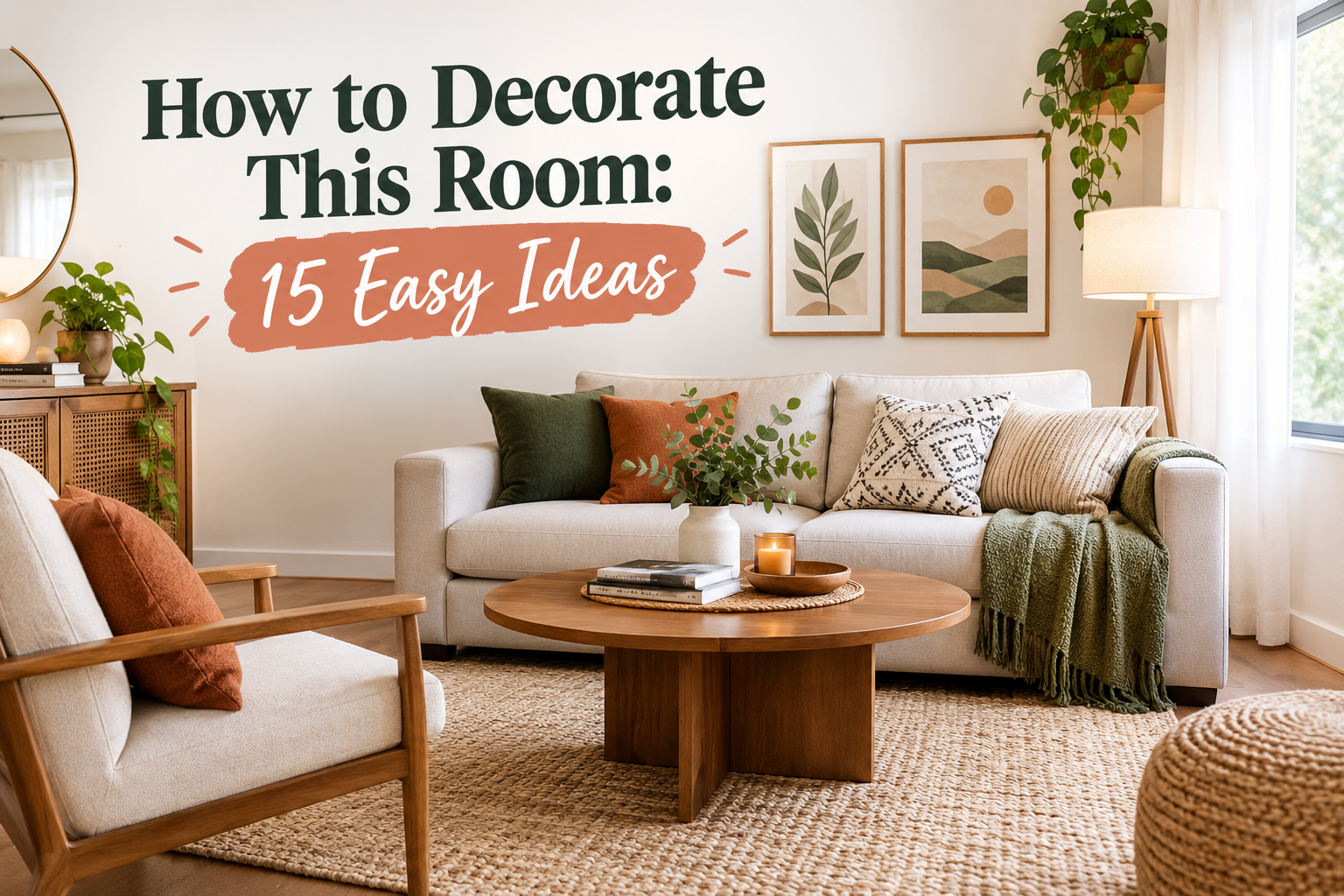
Wondering how to decorate this room without replacing all your furniture or spending a fortune? Whether you're looking at an empty bedroom, an awkward living room, or a small apartment, decorating becomes easier when you know where to start.
You don't need a professional interior designer or expensive furniture to create a beautiful space. Sometimes, changing the furniture arrangement, adding better lighting, choosing a cohesive color palette, and introducing a few decorative accessories can completely change how a room looks and feels.
The secret is to work with the room you already have instead of trying to recreate an inspiration photo exactly.
Quick answer: Start by identifying what your room needs, measuring the available space, and choosing a decorating style. Arrange your existing furniture around a focal point, establish a color scheme, improve the lighting, and add rugs, curtains, artwork, plants, and personal accessories. If you're unsure about the final result, use a photo-based room design tool or 3D room planner to test your ideas before purchasing anything.
This guide covers 15 practical room decorating ideas, simple layout principles, budget-friendly solutions, and ways to visualize your room makeover.
1. Look at Your Room Before Buying Decorations
Before buying new furniture or home accessories, take a good look at your existing space.
Ask yourself what makes the room feel unfinished. Is the furniture too large? Are the walls empty? Does the lighting make the space look dark? Or is the room simply cluttered?
The answer will help you decide what needs to change.
Identify What Is Already Working
Make a note of the furniture and decorative items you want to keep.
A comfortable sofa, wooden dresser, statement mirror, or attractive rug can become the foundation of your new design.
You may only need to rearrange a few pieces and introduce complementary colors.
Decide What the Room Needs
Think about the room's primary purpose.
A living room may need comfortable seating and conversation space. A bedroom should support relaxation, while a home office needs practical lighting, storage, and a functional desk layout.
Your decorating choices should improve how the room works, not just how it looks.
2. Take a Photo of Your Room for Decorating Inspiration
One of the easiest ways to understand what your space needs is to photograph it.
Stand near the doorway or in a corner where you can capture most of the room.
Take photographs during daylight so that the furniture, walls, windows, and flooring are clearly visible.
How to Use a Room Photo
Look at the photograph and identify areas that feel empty, overcrowded, or visually unbalanced.
Notice whether large furniture blocks natural light or interrupts movement.
You can also compare your photograph with interior design inspiration images.
For more detailed planning, a photo-based room design tool can help you visualize different colors, furniture arrangements, and decorative styles.
Tip: Take photographs from at least two angles. One picture rarely shows enough information to understand the entire furniture layout.
3. Choose a Decorating Style That Fits Your Personality
A consistent decorating style can make a room feel intentional rather than randomly furnished.
You don't need to follow one style perfectly, but identifying your preferences helps you make better decisions.
Popular Room Decorating Styles
| Decorating Style | Main Characteristics | Best For |
|---|---|---|
| Modern | Clean lines, simple furniture, uncluttered surfaces | Contemporary apartments |
| Minimalist | Functional furniture, neutral colors, fewer accessories | Small and peaceful rooms |
| Scandinavian | Light wood, soft textiles, practical design | Bright, cozy interiors |
| Bohemian | Layered textures, plants, patterned fabrics | Relaxed, creative spaces |
| Contemporary | Current shapes, balanced colors, mixed materials | Versatile modern homes |
| Traditional | Classic furniture, decorative details, symmetry | Elegant, timeless interiors |
| Japandi | Japanese simplicity combined with Scandinavian warmth | Calm, natural-looking rooms |
| Eclectic | Thoughtful combinations of periods, colors, and textures | Personalized interiors |
If you like several styles, combine them using a consistent color palette or repeating materials.
For example, a modern room can still include a vintage wooden table or a colorful handmade rug.
4. Select the Right Color Palette
Color has a significant influence on how a room feels.
Light neutrals can create an airy appearance, while deeper colors add contrast and intimacy. Earthy tones often create a warm atmosphere, and carefully selected accent colors add personality.
Try the 60-30-10 Color Rule
A useful starting point is the 60-30-10 rule:
60% dominant color, usually walls or large furniture
30% secondary color, such as upholstery, curtains, or rugs
10% accent color through cushions, artwork, or accessories
This is a flexible design guideline rather than a strict formula.
Easy Color Combinations
| Desired Look | Suggested Colors |
|---|---|
| Warm and cozy | Cream, terracotta, warm brown |
| Fresh and airy | Soft white, sage green, natural wood |
| Modern and elegant | Warm gray, charcoal, muted brass |
| Calm and relaxing | Dusty blue, beige, ivory |
| Earthy and organic | Olive green, sand, walnut brown |
| Playful and colorful | Peach, teal, mustard accents |
Before painting an entire wall, test samples in different lighting conditions. The same paint color can look noticeably different in morning and evening light.
5. Arrange Your Furniture for Better Space and Flow
Furniture arrangement is one of the most effective ways to transform a room without spending money.
Begin with the largest piece, such as a sofa, bed, or desk.
Then arrange smaller furniture around it.
Find the Room's Focal Point
A focal point is the feature that attracts attention when someone enters the space.
It might be a fireplace, large window, artwork, television, or upholstered headboard.
Arrange the main furniture to support that feature.
Keep Walking Areas Clear
Avoid placing furniture where it blocks doors or creates difficult walking routes.
As a practical starting point, aim for around 30–36 inches (76–91 cm) of clearance in main circulation areas when space permits.
Smaller secondary clearances may be workable, but accessibility and local safety requirements take priority.
Avoid Pushing Everything Against the Walls
In some living rooms, moving a sofa slightly away from the wall can create a more intentional seating arrangement.
However, wall-hugging layouts may be the best choice in very narrow rooms.
Experiment with different positions before purchasing anything.
6. Use an Area Rug to Bring the Room Together
An area rug can make separate pieces of furniture feel like part of one cohesive arrangement.
It introduces color, texture, comfort, and visual structure.
How to Choose the Right Rug Size
For a living room, try selecting a rug large enough to sit beneath at least the front legs of the main seating furniture.
For a bedroom, the rug should ideally extend beyond the sides of the bed so that it provides a comfortable landing area.
A rug that is too small can make furniture appear disconnected.
Choose Texture as Well as Color
A flatweave rug may work well in a busy room, while a thicker textured rug can add softness to a bedroom.
Consider durability, cleaning requirements, pets, and household activity.
Use an appropriate non-slip rug pad where needed.
7. Improve the Lighting With Three Simple Layers
Lighting is one of the most overlooked elements of room decoration.
A room with good furniture can still feel dull when it relies entirely on one overhead fixture.
Interior designers commonly use layered lighting to make spaces more flexible.
Ambient Lighting
Ambient lighting provides overall illumination.
Examples include ceiling fixtures, recessed lights, and large floor lamps.
Task Lighting
Task lighting supports activities such as reading, studying, cooking, and working.
Examples include bedside lamps, desk lamps, and under-cabinet lighting.
Accent Lighting
Accent lighting highlights selected features.
Examples include picture lights, LED strips, and decorative lamps.
For a relaxed living room or bedroom, warm lighting around 2700K–3000K is a common starting point. Work areas may benefit from cooler or adjustable lighting depending on the task.
Avoid overloading electrical outlets or placing hot light fixtures close to flammable fabrics.
8. Decorate Empty Walls Without Making Them Cluttered
Bare walls can make a room feel incomplete, but you don't need to fill every available surface.
Choose wall decorations based on the scale of the furniture and room.
Easy Wall Decorating Ideas
Hang one large statement artwork above a sofa or bed.
Create a gallery wall with coordinated frames.
Install a mirror where it reflects a pleasant view or natural light.
Use removable wallpaper in a rental property.
Add floating shelves where they can be securely installed.
Display photographs or handmade artwork that have personal meaning.
For wall art above a sofa, a common starting guideline is to choose artwork measuring roughly two-thirds to three-quarters of the sofa's width.
Adjust that proportion based on the artwork, wall height, and room layout.
Secure heavy mirrors and shelves with hardware appropriate for the wall material.
9. Make Your Room Feel Cozy With Curtains and Soft Textures
Soft furnishings help a room feel comfortable and finished.
Curtains, cushions, blankets, upholstery, and rugs introduce layers of texture without requiring major changes.
Choose Curtains That Suit the Windows
If you want the room to appear taller, consider mounting curtains above the window frame, where wall space and installation conditions allow.
Choose fabric based on the room's function.
Sheer curtains can soften daylight, while lined or blackout curtains may be useful in bedrooms.
Mix Different Textures
Combine a few complementary materials, such as linen, cotton, wool, wood, and woven fibers.
For example, a neutral sofa can become more interesting with textured cushions, a knitted throw, and a natural-fiber rug.
Avoid buying too many accessories in the same color, texture, and size.
Contrast helps create depth.
10. Add Plants and Natural Elements
Plants can introduce color, texture, and a connection to nature.
They work particularly well in rooms dominated by hard furniture surfaces.
Easy Ways to Decorate With Plants
Position a larger plant near a bright corner where its light requirements can be met.
Use smaller plants on shelves or side tables.
Combine plants with natural materials such as wood, stone, or woven baskets.
Choose species based on available light and your willingness to maintain them.
For households with pets or young children, verify plant safety before buying.
If your room receives very little natural light, consider realistic artificial greenery instead of placing a living plant where it cannot thrive.
11. How to Decorate a Small Room Without Making It Look Crowded
Small rooms require careful furniture selection, but limited space does not mean limited style.
The aim is to balance function, storage, and visual openness.
Choose Furniture With Multiple Functions
A storage ottoman can serve as seating and concealed storage.
A bed with drawers may reduce the need for an additional dresser.
A wall-mounted desk can free floor space in a compact bedroom or home office.
Use Vertical Space
Tall shelving can make better use of available wall height.
Wall-mounted lighting may free bedside table space.
However, anchor tall storage furniture securely to prevent tipping.
Keep Furniture Proportional
Oversized furniture can block movement in a small room.
Measure before buying and consider pieces with slimmer profiles.
A few appropriately scaled items usually work better than many tiny pieces scattered throughout the room.
Create Visual Continuity
Using related wall, curtain, and furniture colors can make a compact space feel more cohesive.
Mirrors may also help distribute light when positioned thoughtfully.
12. How to Decorate an Awkward or Empty Corner
Unused corners are common in bedrooms, living rooms, and apartments.
Instead of filling them with random objects, consider whether the corner could serve a useful purpose.
Turn an Empty Corner Into Something Functional
A reading corner could include a comfortable chair, small side table, and floor lamp.
A work corner might accommodate a compact desk and shelving.
A narrow space beside a window could become a plant display.
An entry corner might benefit from a small bench and storage baskets.
The best choice depends on the corner's dimensions, nearby doors, heating equipment, and circulation needs.
Sometimes the best decorating decision is to leave the corner empty, especially if the room already contains several large furniture pieces.
13. How to Decorate a Room on a Budget
You don't need to replace your furniture to make a noticeable improvement.
Begin with changes that have little or no cost.
Affordable Room Decorating Ideas
| Budget | Possible Improvements |
|---|---|
| $0 | Rearrange furniture, declutter, reuse accessories |
| $25–$50 | Cushion covers, small frames, decorative storage |
| $50–$100 | Lamp, curtains, secondhand side table |
| $100–$250 | Larger mirror, selected rug, paint supplies |
| $250–$500 | Targeted furniture upgrade or a more complete refresh |
These are illustrative spending bands in USD, not current retailer quotes. Prices vary by location, quality, and installation requirements.
Start With What You Already Own
Move accessories between rooms.
Rearrange artwork.
Restyle existing shelves.
Repurpose an old side table where practical.
Clean existing upholstery and refresh textiles before purchasing replacements.
Consider Secondhand Furniture
Thrift stores, charity shops, neighborhood marketplaces, and secondhand furniture sellers can provide lower-cost options.
Inspect furniture for stability, damage, pests, and odors before purchasing.
For upholstered pieces, consider cleaning needs and applicable fire safety labeling.
Spend More on High-Impact Pieces
If you have a limited budget, prioritize items that solve a real problem, such as inadequate lighting, a poorly sized rug, or missing storage.
Decorative accessories should generally come after layout and functional improvements.
14. Use a 3D Room Planner or AI Tool Before Decorating
If you're still wondering how to decorate this room, a digital room planner can help you test different ideas.
Virtual design tools allow you to experiment with layouts without physically moving every item.
For example, Living Spaces' 3D Room Designer allows users to create a layout, select furniture, and view a rendered design.
How to Plan Your Room Digitally
First, measure your room and identify doors, windows, and fixed features.
Create a floor plan or upload a room photograph into a suitable design tool.
Add your existing furniture dimensions wherever possible.
Test different furniture placements and color combinations.
Compare the options before making purchases.
What Can AI Room Design Help With?
Depending on the software, AI room visualization can suggest color schemes, furniture styles, accent walls, and decorative arrangements.
However, AI-generated room images may change proportions, remove structural details, or show furniture that does not physically fit.
Treat visualizations as inspiration rather than precise measurements or construction plans.
For important purchases, confirm the actual room dimensions and furniture specifications.
15. Add Personal Touches and Finish the Room
The final decorating stage is where your space begins to feel like home.
Once the furniture layout, lighting, and major textiles are established, introduce smaller decorative accessories.
Choose items that reflect your interests, experiences, and personality.
These might include travel photographs, artwork, family keepsakes, books, ceramics, or handmade objects.
Style Surfaces Carefully
For shelves, combine a few items of different heights and textures.
On a coffee table, use a tray to organize selected accessories.
For a bedside table, keep practical essentials within easy reach.
Avoid filling every available surface.
The aim is to make the room feel personal while preserving enough space for daily activities.
How to Decorate Different Types of Rooms
The same basic design principles apply throughout a home, but each room has different functional requirements.
| Room | Best Starting Point | Useful Decorating Ideas |
|---|---|---|
| Living room | Sofa layout and conversation areas | Rug, layered lighting, artwork, curtains |
| Bedroom | Bed placement and sleep comfort | Soft bedding, bedside lamps, calming colors |
| Small apartment | Multifunctional furniture and storage | Vertical shelving, mirrors, compact furniture |
| Home office | Desk location and working light | Task lighting, ergonomic seating, cable storage |
| Guest room | Comfortable sleeping arrangements | Fresh bedding, accessible storage, reading light |
| Rental room | Reversible improvements | Freestanding lamps, removable decor, portable storage |
How to Decorate a Living Room
Start with the seating arrangement.
Consider the relationship between the sofa, chairs, television, windows, and main walkway.
Use an area rug to visually connect the seating zone.
Add table or floor lamps to complement overhead lighting, and finish with artwork and soft furnishings.
How to Decorate a Bedroom
Position the bed where it supports comfortable access and circulation.
Choose bedding that complements the overall color palette.
Use appropriate window coverings for privacy and light control.
Add bedside lighting and minimize unnecessary clutter.
How to Decorate a Rental Room
Choose improvements that are easy to remove.
Consider freestanding shelves, decorative textiles, table lamps, and removable accessories.
Before using adhesive wallpaper or installing hardware, review your rental agreement and test materials to avoid damage.
Common Room Decorating Mistakes to Avoid
A beautiful room is not simply a collection of attractive products.
Several mistakes can make a space feel disconnected even when individual items look appealing.
Buying furniture before measuring: Large purchases may not fit or leave sufficient circulation space.
Choosing everything from one matching collection: Too much uniformity can make a room feel impersonal.
Using only overhead lighting: This can create harsh or uneven illumination.
Choosing a rug that is too small: Furniture may appear visually disconnected.
Ignoring storage: Everyday clutter can undermine the decorating scheme.
Overdecorating walls and shelves: Too many objects compete for attention.
Following trends without considering function: A fashionable item is not useful if it makes the room difficult to use.
Ignoring your existing furniture: Replacing everything is often unnecessary.
A good decorating plan considers how the room will be used long after the makeover is finished.
Room Decoration Checklist: What to Do First
Use this checklist to decorate your room in a practical order.
Identify the room's purpose and biggest problems.
Photograph and measure the existing space.
Decide which furniture pieces to keep.
Establish a realistic budget.
Select a decorating style and color palette.
Plan the main furniture arrangement.
Choose an appropriately sized rug.
Improve ambient, task, and accent lighting.
Add suitable curtains or blinds.
Select wall art, mirrors, and shelving.
Introduce plants, textures, and accessories.
Review the room and remove unnecessary items.
You can complete the process gradually. A successful room makeover does not need to happen in one shopping trip.
Frequently Asked Questions About Decorating a Room
How Do I Know How to Decorate This Room?
Start by taking photographs, measuring the space, and identifying the room's main purpose. Choose a style and color palette, arrange the largest furniture pieces, and add lighting, textiles, and accessories gradually.
How Can I Decorate My Room Without Buying Anything?
Rearrange existing furniture, remove clutter, move artwork between rooms, restyle shelves, and reuse decorative items you already own. Improving the layout can make a noticeable difference without spending money.
Can I Upload a Picture of My Room and Get Decorating Ideas?
Yes. Some photo-based AI room design tools allow you to upload an image and explore different styles, colors, or furniture arrangements. Features and pricing vary, and generated images may not preserve exact dimensions.
What Should I Decorate First in a Room?
Start with the room's function, measurements, furniture layout, and largest existing pieces. Once these decisions are clear, choose colors, rugs, lighting, curtains, and smaller decorative accessories.
How Can I Make My Room Look Beautiful on a Low Budget?
Focus on high-impact changes such as decluttering, rearranging furniture, improving lighting, updating cushion covers, and using secondhand decor. Spend on items that address the room's biggest functional or visual problems.
What Colors Make a Small Room Look Bigger?
Light neutrals and low-contrast color schemes can create an open, cohesive appearance. However, darker colors can also work beautifully when supported by appropriate lighting and a thoughtful furniture arrangement.
How Do I Decorate an Awkward-Shaped Room?
Measure the room carefully and identify fixed features. Divide the space into useful zones, choose proportionate furniture, and preserve clear walking routes. A floor plan or digital room planner can help test different arrangements.
How Can I Make My Room Look Expensive?
Choose correctly sized furniture, improve lighting, use coordinated colors, select an appropriately scaled rug, and keep surfaces organized. Quality, proportion, and thoughtful styling often matter more than purchasing expensive accessories.
What Is the 60-30-10 Rule in Interior Design?
The 60-30-10 rule is a flexible color guideline: approximately 60% dominant color, 30% secondary color, and 10% accent color. It can help create a balanced scheme, but it is not a requirement.
Should I Choose Furniture or Paint First?
Start with the room's measurements and the furniture you plan to keep. Large furniture or a favorite rug can guide your paint selection. Test paint samples in the actual room before committing.
Conclusion
If you're asking how to decorate this room, the best place to start is with what you already have.
Study the layout, take measurements, and decide how you want the space to function. Then choose a consistent decorating direction and improve the room through furniture placement, color, lighting, rugs, window treatments, and meaningful accessories.
You don't need an unlimited budget or a complete furniture replacement to achieve a cohesive result.
Take the process one step at a time, test ideas before making expensive decisions, and prioritize a space that feels comfortable and works for your everyday life.
The most successful room decoration is not necessarily the trendiest. It's the one that reflects your personality and makes your home easier and more enjoyable to use.
References and Further Reading
Last reviewed: October 17, 2026. Measurements, design proportions, and decorating budgets are practical starting points and should be adapted to your actual room and household needs.